29 May 2026 · 5 min read
How to fill a skip safely (and within the weight limit)
Practical tips for loading a skip: the rim rule, layering heavy waste first, distributing weight, avoiding overfill fees and what providers can refuse on collection.
How to fill a skip safely (and within the weight limit)
Filling a skip is one of those tasks that looks self-explanatory until you watch someone misjudge it. Get it right and the collection is smooth, you pay what you quoted, and the load is sorted efficiently at the transfer station. Get it wrong and you risk an overfill fee, a refused collection, or worse, an item falling off in transit.
A few simple habits cover almost every case.
The rim rule: never load above the top
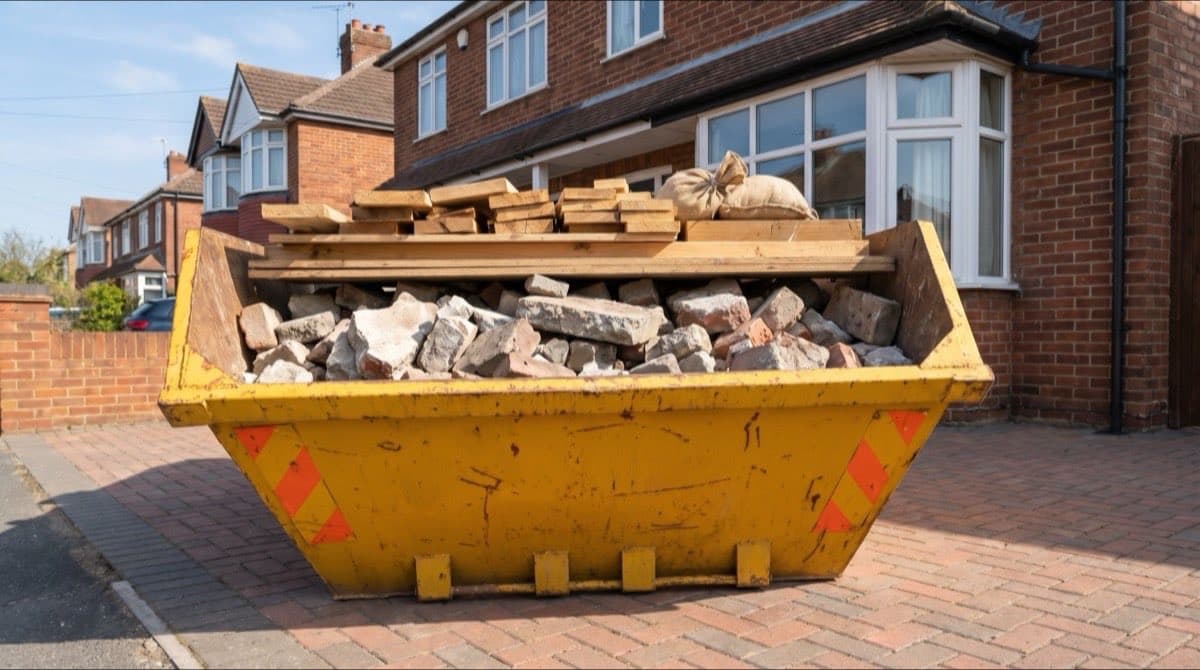
This is the single rule providers care about most. If waste pokes above the top edge of the skip when collected, the lorry driver will usually refuse to lift it, and you'll be left to either remove the excess or pay an overfill fee.
The reason is regulatory: skips travelling on UK roads with waste above the rim breach load-securing rules. The driver, the firm and the council all have a stake in this being non-negotiable.
Plan your load with the rim in mind from the start. Leave at least a few inches of headroom and load awkward, tall items (a broken door, a length of timber) flat rather than vertical.
Heaviest waste in first
Layer in this order, bottom up:
- Heavy and dense (soil, rubble, broken concrete, bricks) at the bottom.
- Bulky semi-dense (broken plasterboard, tiles, ceramic) above that.
- General mixed waste (cardboard, plastics, packaging, broken furniture) on top.
- Awkward voluminous items (a sofa, a mattress, a long piece of timber) last, lying flat to use the space without breaching the rim.
This isn't just about getting more in. Heavy material at the bottom keeps the skip's centre of gravity low for the lift, and lets the picker at the transfer station get to the lighter, more recyclable material first.
Distribute weight evenly across the floor
Don't dump everything in one corner. A skip with all the heavy material at one end can shift on the lorry or, on a soft driveway, sink. Spread the heavier loads across the full floor first. If you're mostly clearing one heavy material (say, soil from a single dig), use the wheelbarrow to move it around as you go.
Watch the weight, not just the volume
Volume looks impressive; weight is what gets the skip lifted safely. Skips have a maximum gross weight, set by the lorry's lifting capacity, and it varies by size:
- A 4 yard mini skip is typically rated up to about 2 tonnes.
- A 6 yard builder's skip lifts at about 4 tonnes.
- An 8 yard skip is usually 4.5 to 5 tonnes.
- 10 yard and bigger skips have higher gross weights but are made for lighter, bulkier waste, so the limit is volume-by-density (which is why providers ask you not to put rubble in maxi skips).
A 6 yard skip filled to the brim with concrete will exceed the weight limit before it's full. If you're clearing dense waste, fill to a sensible level (around two thirds for pure rubble) and ask the provider to swap rather than overload.
Don't mix what shouldn't mix
Two combinations cause grief at the transfer station and can attract a contamination fee:
- Heavy waste mixed with light waste in volume. A large maxi skip half-filled with soil and half with timber is hard to sort and exceeds the safe weight for a maxi vehicle.
- Hazardous items hidden in general waste. A car battery buried under cardboard, a half-tin of paint inside a box, a fluorescent tube broken into a corner. The provider has to pay to extract these, and that cost lands back on you.
Keep awkward items accessible
If you've got plasterboard, save it for the top so the picker can pull it cleanly into the gypsum stream. Same for any large metal items or cardboard. This boosts the recycling rate of your skip without changing the price.
On collection day
A few common-sense steps the morning of collection:
- Make sure the skip is clear of vehicles, bins, low branches and washing lines.
- Don't add anything once the driver is on their way; a last-minute mattress can trigger a refused lift.
- If the skip is permitted on the road, double-check the safety lights and reflectors are still in place.
When a refused collection actually happens
It's rare but does happen. If the driver refuses, they'll explain why: usually overfill, hazardous items spotted, or unsafe access. Most providers will rebook for the next day with the excess removed; some charge a return-trip fee. Either way, it's worth a phone call straight away rather than reloading and hoping.
A safely filled skip is a faster collection, a cleaner recycling sort and a price that matches the original quote. The five-minute plan at the start of the job saves the hour-long mess later.
Ready to book a skip?
Compare fast, no-obligation quotes from trusted local providers.