29 May 2026 · 6 min read
What happens to waste in a skip after collection?
Where your skip goes after it's lifted, how the waste is sorted, what gets recycled, and what ends up as energy recovery or landfill in the UK.
What happens to waste in a skip after collection?
When the lorry lifts your skip and drives away, the journey is just beginning. UK skip hire firms are licensed waste carriers, which means they are responsible for sorting, recycling and disposing of everything you load in line with strict environmental rules. Knowing how that process works helps you understand the cost of skip hire and, in many cases, lets you load your skip so a higher share is recycled.
Step one: the waste transfer station
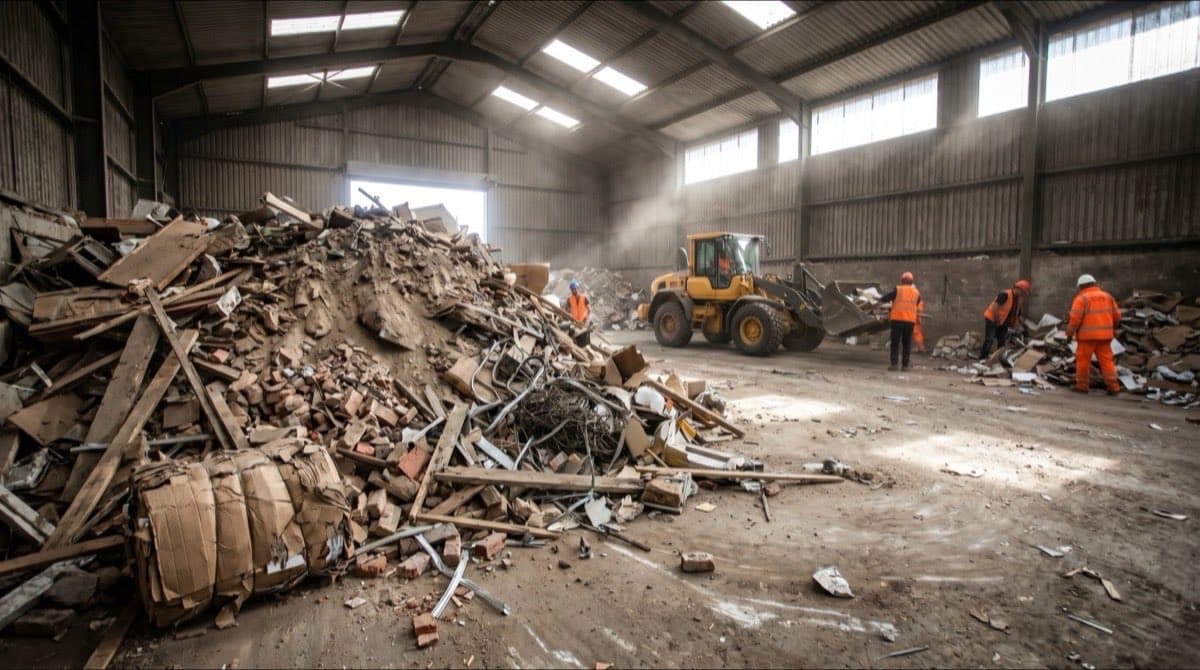
Almost every skip in the UK goes first to a licensed waste transfer station, run either by the hire firm itself or a partner. The skip is tipped onto a sorting floor (or in newer facilities, into a controlled drop area) where the contents can be inspected and separated. This is where the headline recycling rate is set: a well-sorted skip can be 80 to 95 percent diverted from landfill, while a contaminated one can drop to under 50.
Step two: mechanical and manual sorting
A modern transfer station combines machinery and people. Magnets pull out ferrous metals (rebar, steel offcuts, bike frames). Eddy currents lift non-ferrous metals like aluminium and copper. Trommels and air-knives separate light fractions (cardboard, plastics) from heavy ones (rubble, soil). Pickers on a sorting line then catch what the machines missed: cleaner timber, plasterboard, electrical items.
The cleaner your skip when it arrives, the further each material travels down the recycling chain. Mixed contaminated loads are processed at lower value, which is why providers often quote heavy waste (soil, rubble, concrete) separately from light mixed waste.
Step three: what actually gets recycled
For a typical domestic or trade skip, the destinations look roughly like this:
- Metals are baled and shipped to UK or European mills, melted and reborn as rebar, vehicle bodies, drinks cans and white goods.
- Hardcore (brick, concrete, rubble) is crushed into recycled aggregate, used for road sub-base, drainage and new concrete.
- Soil and inert fines become engineered landscape fill or, where clean, return to construction sites.
- Wood is shredded into chips for biomass energy, animal bedding and panel-board manufacture (chipboard, OSB).
- Plasterboard is processed separately by specialists who recover the gypsum for new boards.
- Cardboard and clean paper is baled and pulped back into packaging.
- Plastics are sorted by polymer (PET, HDPE, PP) and either re-extruded or sent for chemical recycling.
What doesn't get recycled
A real chunk of waste cannot be recycled cost-effectively today. Contaminated mixed fines, treated wood with metals embedded, dirty plastics, certain insulations and bonded composites typically go for energy recovery: they are shredded into a refuse-derived fuel (RDF) and burned in modern energy-from-waste plants that generate electricity and district heating. A smaller fraction, usually under 10 percent of a well-sorted skip, ends up in licensed landfill.
In line with UK regulations, hazardous materials never enter the regular skip stream. Asbestos, batteries, paints, oils, fridges and electricals are diverted to specialist waste streams from the very start, which is why your provider will refuse them when loading.
How to make your skip more recyclable
Two small habits make a noticeable difference:
- Keep heavy waste separate from light waste. Soil and rubble in a 6 yard builder's skip; furniture, packaging and timber in a bigger maxi. Mixing the two contaminates both streams.
- Don't bury awkward items. If you have plasterboard, keep it on top or near the door so the picker can pull it cleanly. Same for any larger metal or any cardboard.
It's worth noting: most operators report internal recycling rates over 90 percent for clean construction skips and 70 to 80 percent for general domestic ones. Your provider can share their own figure if you ask.
The takeaway
Your skip isn't a one-way trip to a hole in the ground. It's an input to a sorting and recycling network that recovers most of what you load. Loading thoughtfully (heavy vs light kept apart, awkward items accessible, no hazardous waste) helps that network do its job and keeps your job cleaner, cheaper and greener.
Ready to book a skip?
Compare fast, no-obligation quotes from trusted local providers.