29 May 2026 · 7 min read
What you can't put in a skip (and where to take it instead)
The hazardous items skip hire firms can't legally take, why each is excluded, and the right disposal route for paints, asbestos, batteries, fridges, electricals and more.
What you can't put in a skip (and where to take it instead)
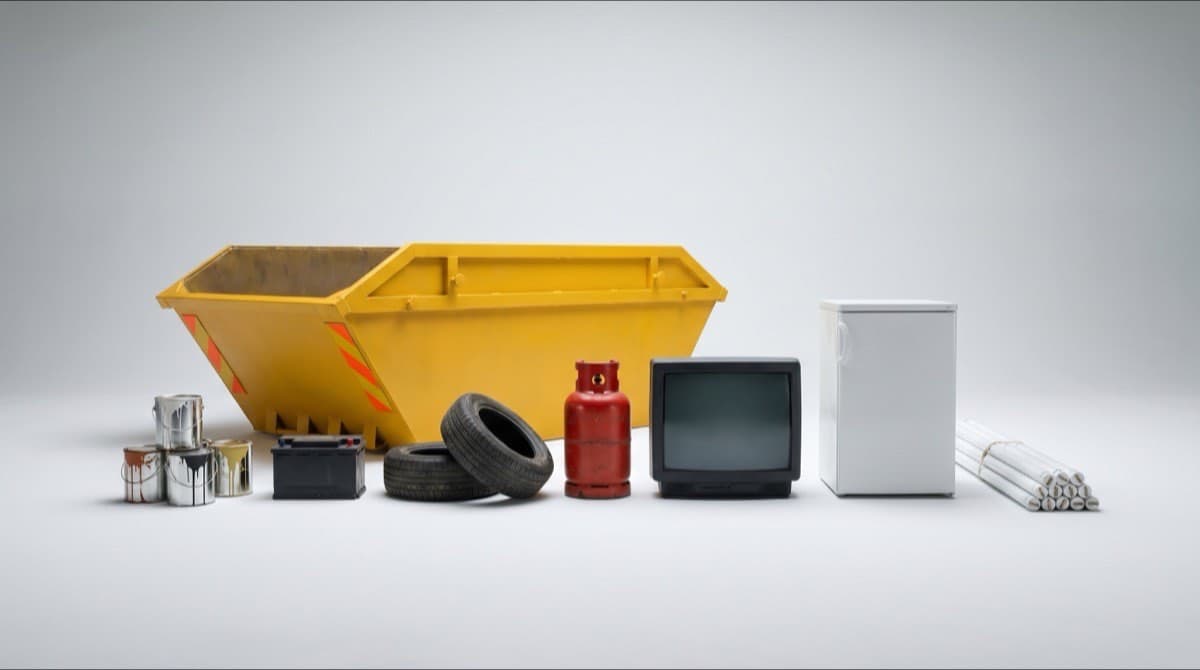
Almost every skip-hire job hits the same speed bump: an item you're not sure about. The rule of thumb is straightforward: if it's hazardous, contains refrigerants, holds a sealed power source or needs specialist treatment, it cannot go in a regular skip. UK waste carriers are licensed for general waste, not hazardous, so anything on the restricted list has to leave site by a different route.
Here is the full picture: what's actually banned, why, and where it should go instead.
Asbestos and asbestos-containing materials
Strictly off-limits. Asbestos releases fibres when broken or disturbed and is regulated under the Control of Asbestos Regulations 2012. Even small fragments from an old garage roof, artex ceiling or floor tile cannot go in a normal skip. Specialist licensed asbestos removers double-bag, label and transport it to designated hazardous waste sites. If you suspect a material is asbestos, stop and book a test before doing anything else.
Paint, solvents, fuels and oils
Liquids and flammables are out. Half-tins of leftover emulsion, gloss, white spirit, petrol, diesel, engine oil and brake fluid all need either a hazardous waste run or your local Household Waste Recycling Centre's dedicated chemical bay. Most councils accept them free from householders. Some paint brands also run take-back schemes (Dulux Community RePaint is the best known).
The only paint that can sometimes go in a skip is fully dried, solidified residue inside an empty tin, and even then only when the provider confirms.
Batteries (every type)
All batteries are banned: AA, button cells, car batteries, power tool packs, leisure batteries and lithium-ion packs from laptops, phones and e-bikes. They can't go in skips because they leach heavy metals and, in the lithium case, are a serious fire risk. Damaged li-ion cells have caused fires in skip yards and on collection lorries.
Take household batteries to supermarket collection boxes (most large stores have them by the entrance). Take car and leisure batteries to the recycling centre or back to the retailer that sold you the new one.
Fridges, freezers and air-conditioning units
White goods that contain refrigerant gas (CFCs, HFCs, hydrocarbons) are classified as WEEE and need de-gassing at a licensed facility before disposal. Your council will often collect fridges as part of a bulky waste pickup for a small fee, or take them back when you buy a replacement under the retailer take-back scheme.
Some skip firms can collect fridges as an extra item with a separate fee; ask before assuming.
Electricals (WEEE)
Anything with a plug or a battery falls under WEEE (Waste Electrical and Electronic Equipment). TVs, monitors, microwaves, kettles, power tools, vacuum cleaners, exercise equipment, hairdryers and similar. WEEE has to be processed by a licensed treatment facility that recovers metals, plastics and any embedded batteries.
Take them to the recycling centre's WEEE bay, return them to the retailer under their take-back duty, or list them on a reuse network (Olio, Freecycle, local Facebook groups) if they still work.
Tyres
Tyres need to be shredded, granulated or re-treaded by specialists and cannot be landfilled in the UK. Your local tyre fitter will usually take them for a small fee, and your recycling centre accepts a few per household per visit.
Mattresses and upholstered furniture
A grey area. Many skip firms will take mattresses and sofas but charge a per-item fee (typically £15 to £40) because of new POPs (persistent organic pollutants) regulations for upholstered furniture. Always declare them when you book. Otherwise, book a council bulky waste collection or use a registered mattress recycler.
Gas bottles and aerosols
Propane, butane, CO2 canisters and pressurised aerosols are explosion risks if crushed. Return gas bottles to the supplier (often a deposit refund applies), and take aerosols to a household recycling centre's chemical bay.
Clinical, medical and biohazard waste
Sharps, syringes, expired medication, soiled dressings: all need specialist clinical waste disposal. Your pharmacy will accept unused medication. Sharps go to the GP surgery in an approved sharps bin.
Why these rules exist
It looks like a long list, but every item is excluded for a reason: protecting the workers who sort the skip by hand, the lorry driver, the recycling facility, and the environment the waste eventually returns to. A single battery in a load can ignite a sorting line. A small piece of asbestos can expose dozens of people. A leaking paint tin can contaminate an entire skip's recoverable fraction.
If you've accidentally put something restricted in your skip
Call the provider before collection. They will either send someone to retrieve it (sometimes free if you spot it early) or arrange a proper disposal route. Don't try to fish it out yourself if it's a heavy or unstable item.
The short version
If you're unsure whether something is allowed, ask your provider before loading. The five-second phone call is far cheaper than a contamination fee on collection or a fire on the way to the depot.
Ready to book a skip?
Compare fast, no-obligation quotes from trusted local providers.